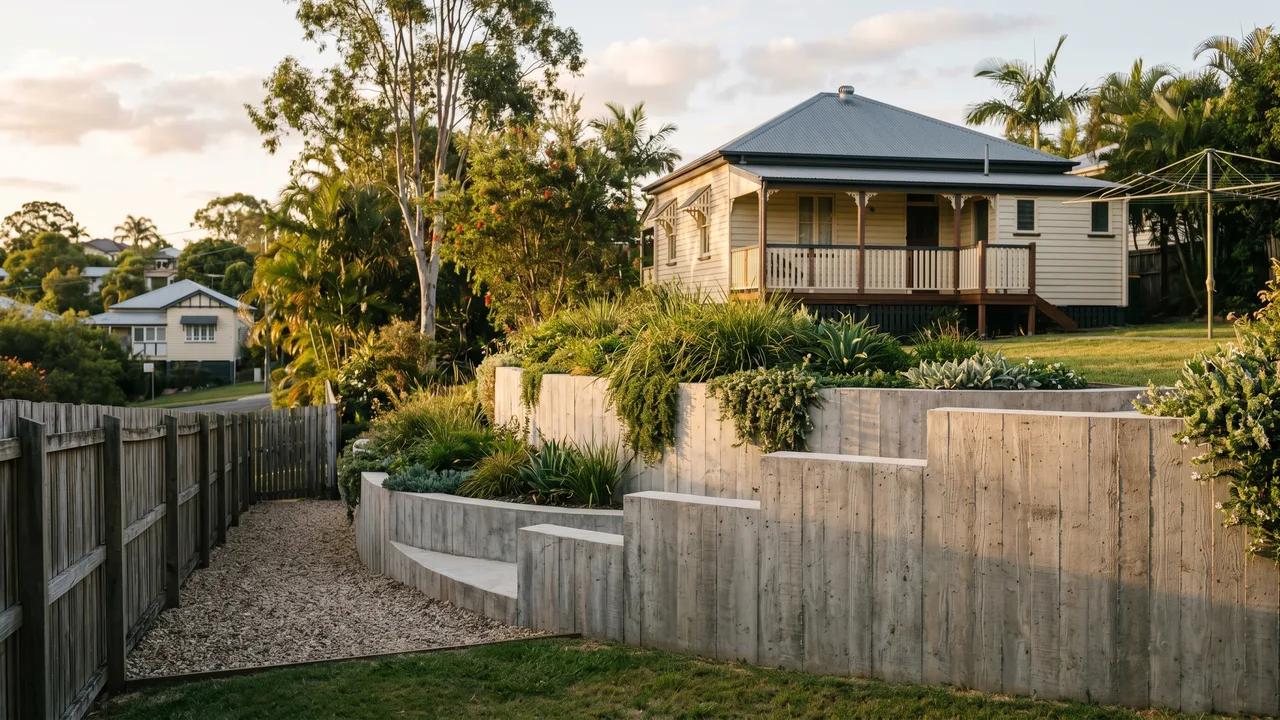
Concreting
Concrete Retaining Walls Hemmant.
Concrete Retaining Walls in Hemmant
Hemmant sits at the northern edge of the Bayside cluster, and like much of the surrounding area, a good number of residential blocks here have some slope to them. That slope is manageable, right up until the soil starts moving. If you've got a garden bed creeping toward your driveway, a fence leaning under soil pressure, or a terrace that's slowly losing its edge, a concrete retaining wall is usually the right fix.
This page covers what the work actually involves, what it typically costs in this part of Brisbane, and how to know whether it's the right solution for your block.
What the Work Involves
Concrete retaining walls for residential properties in Hemmant fall into two main types.
Poured (in-situ) concrete walls involve setting up formwork, positioning steel reinforcement (reo bar), and pouring concrete in place. Once cured, the formwork is stripped and the wall is a single solid structure. These suit taller retaining jobs or areas where a smooth, rendered finish is wanted.
Concrete block walls (sometimes called besser block or hollow core block walls) are built course by course, with reo bar running vertically through the cores, which are then filled with concrete or grout. These are common for garden terracing and mid-height retaining up to around 1.0-1.2 metres on a typical residential block.
Either method typically involves:
- Excavating and levelling the base
- Compacting and setting a concrete footing below the wall
- Installing drainage aggregate and agricultural (ag) pipe behind the wall (critical in Bayside's clay-heavy soils)
- Placing the wall structure itself
- Backfilling in controlled lifts
Most residential retaining jobs use a concrete pump or wheelbarrow access, depending on how tight the site is. Bayside properties often have narrow side access, so that's worth flagging early.
When You Likely Need One
You don't always need a wall immediately when you spot a slope. But a few signs suggest it's time to get someone out for a proper look:
- Soil is visibly slumping or moving toward a structure, path, or driveway
- An existing timber or sleeper wall is rotting, bowing, or pulling away from fixings
- A garden terrace has lost its defined edge and is washing toward the lawn or house
- You're planning to add a shed slab, driveway extension, or patio on a sloped block and need to establish a level platform
Salt air and heavy clay soils around Hemmant and the wider Bayside area accelerate the deterioration of timber walls in particular. If your sleeper wall is more than 10-15 years old and showing any movement, concrete is worth considering as a replacement.
What It Typically Costs
Residential retaining walls in Brisbane generally range from around $3,500 to $12,000 for the scope that makes sense on a suburban block. Simple block walls under a metre high for a single garden terrace sit toward the lower end. Taller poured concrete walls, walls with steps or returns, or jobs requiring significant excavation on a tight Hemmant block sit higher.
Factors that move the price:
- Wall height - anything over 1.0 metre typically requires engineer certification under Queensland building regulations, which adds a design and approval cost
- Length of the run - more metres means more materials and labour
- Site access - narrow side gates, steep entry, or overhead obstacles affect how equipment and materials get in
- Drainage requirements - ag pipe and drainage aggregate behind the wall is standard practice but adds cost; skipping it causes problems later
- Soil conditions - expansive clay (common in parts of Hemmant and Wynnum West) may need additional footings depth
What's in the Quote, and What Might Be Extra
A detailed quote from a local concretor should typically cover:
- Site assessment and measurements
- Excavation and footing preparation
- Formwork or block materials and placement
- Reo bar and concrete
- Basic drainage behind the wall
- Backfill and rough reinstatement
Things that sometimes sit outside a standard quote:
- Engineering certification (required for walls over 1.0 metre in Queensland)
- Council permits if required
- Landscaping or turf reinstatement after the wall
- Removal of an existing wall (demolition and disposal add cost)
Always ask the concretor to specify what's included so there are no surprises at invoice stage.
Is a Retaining Wall Right for Your Block?
A concrete retaining wall makes sense when:
- You need to hold back more than about 300-400mm of soil reliably over the long term
- The area sees regular water movement or clay-heavy soil pressure
- You want a low-maintenance solution (concrete outlasts timber significantly in Bayside conditions)
- You're planning further construction and need a stable level area
If the slope is gentle and erosion is minor, a planted ground cover or simple garden edge might be enough. But for anything structural or over about half a metre of retained height, a proper concrete wall is generally the more durable answer.
A Straightforward Note on Safety and Qualifications
In Queensland, retaining walls over 1.0 metre typically require a building permit and a licensed builder or engineer. Even walls under that threshold should be built with correct footings and drainage to avoid future movement and liability. When we connect you with a local provider, they're expected to carry the appropriate licences and public liability insurance. If you're ever unsure, it's reasonable to ask a tradesperson to show their QBCC licence number before work starts.
If you're not sure whether your block needs a wall or just some maintenance on an existing one, a quick conversation can usually point you in the right direction. Reach out and describe what you're seeing; we'll connect you with someone local who can give you an honest assessment.
Quick answers
Frequently asked.
Do I need council approval for a retaining wall in Hemmant?
How long does a concrete retaining wall last compared to timber sleepers?
Why does drainage behind a retaining wall matter so much?
What's the difference between a poured concrete wall and a concrete block wall?
How much does a concrete retaining wall cost in Hemmant?
Can I build a concrete retaining wall myself to save money?
Ready to book
Quickest is by phone.
Up-front pricing on the call. Booked in one go. No site visit needed.