Concreting
Exposed Aggregate Concrete Hemmant.
Exposed Aggregate Concrete in Hemmant
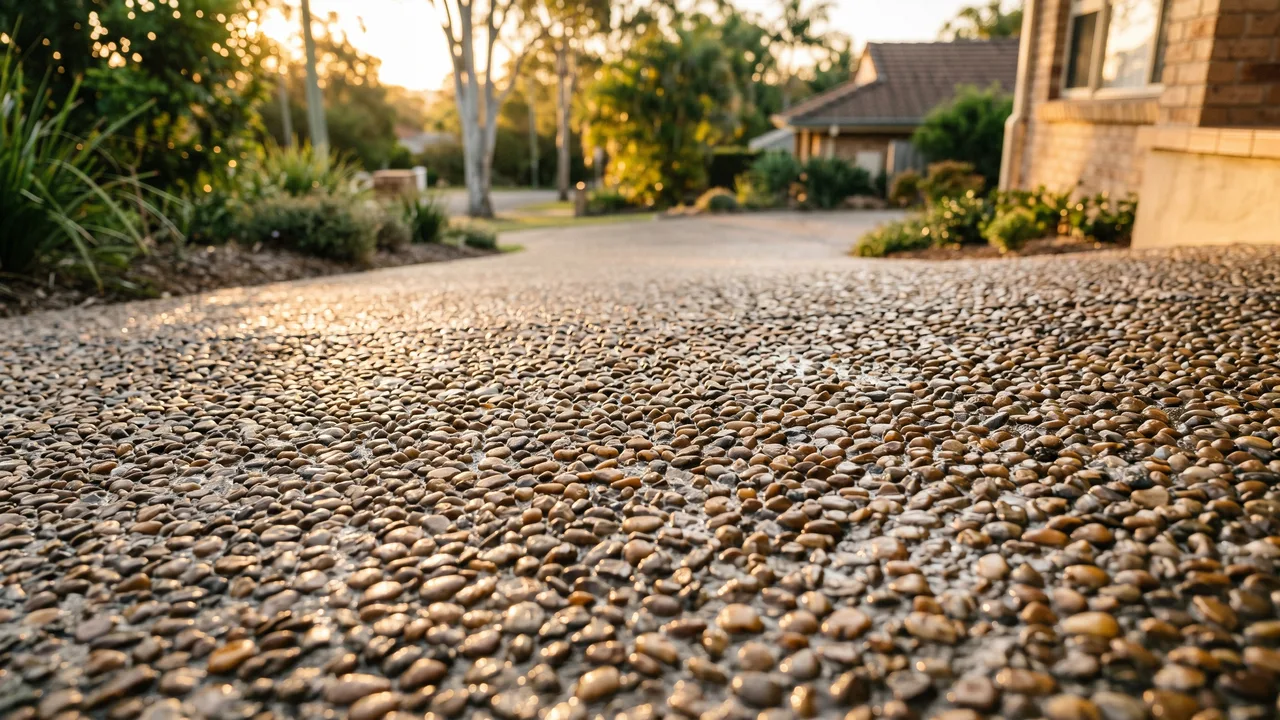
Exposed aggregate is one of the more satisfying concrete finishes you can put on a driveway, path or entertaining area. It looks deliberately crafted rather than just poured, and the textured surface gives decent grip underfoot, which matters in a suburb where afternoon storms arrive fast and surfaces stay wet.
Here's what the work actually involves.
What the Job Looks Like on Site
A concretor pours a standard concrete slab, then applies a surface retarder, which is a chemical that slows the curing of the top layer. Once the bulk of the slab has set enough to walk on, the top layer is pressure-washed off to expose the stone aggregate beneath. The aggregate itself, usually a mix of river pebbles, granite chips or quartz, can be specified before the pour. Colour, size and blend all vary.
Equipment on site typically includes a concrete mixer or pump (depending on access), compactor plate, screeds, a pressure washer rated high enough to cleanly expose stone without damaging the matrix, and finishing tools for edging. If you want a specific aggregate blend, that material is usually pre-mixed or added to the wet pour to a consistent depth.
After exposure, the surface gets a penetrating sealer. In Hemmant and across the Bayside cluster, salt air accelerates surface weathering and can degrade an unsealed finish faster than you'd expect inland. Sealing is standard practice here, not optional.
When a Hemmant Homeowner Needs This
You're probably thinking about exposed aggregate if:
- You're laying a new driveway and want something that holds up visually over time (plain grey broom-finish concrete can look tired within a few years)
- Your entertaining area slab is plain concrete and you're resurfacing or extending it
- You need grip on a sloping path or side access where smooth concrete would be a slip risk in wet weather
- You're building a new garden path and want it to complement landscaping rather than fight it
It's worth noting that exposed aggregate isn't a repair product. If your existing slab is cracked or uneven, concrete resurfacing is a better conversation to start with. Exposed aggregate is a finish choice made at pour time, not something you apply over a damaged surface later.
There's no particular season to chase in Hemmant. Concrete can be poured year-round here. That said, concretors do prefer to avoid the hottest part of summer days, and you'll want to keep the fresh slab shaded and damp for the first 24-48 hours during curing. Your concretor will manage that.
What It Typically Costs in Brisbane
For residential exposed aggregate work in the Hemmant and Bayside area, expect a rough range of:
- Small path or courtyard area (under 20m²): $1,500 to $3,500
- Standard driveway (20-60m²): $3,500 to $8,000
- Large entertaining area or combined driveway and path: $7,000 to $15,000+
What moves the price:
- Aggregate choice. Standard river pebble is cheaper than premium quartz or coloured stone blends.
- Site access. Narrow side access or a property that won't take a concrete truck means pumping, which adds cost.
- Ground prep. If existing concrete needs to be broken up and removed first, that's usually quoted separately. Rubble removal in Hemmant typically adds $300 to $1,200 depending on volume.
- Thickness and reinforcement. A driveway taking vehicle loads needs more steel reinforcing mesh than a garden path.
- Sealer grade. A high-build penetrating sealer for a coastal environment costs more than a basic coat, but it lasts significantly longer.
What the Quote Should Cover
A solid quote from a local concretor should include: formwork, concrete supply, pour, retarder application, aggregate exposure, and one coat of sealer. Ask specifically whether:
- Ground prep and any existing concrete removal is included or separate
- The aggregate blend is locked in on the quote or subject to variation
- A second sealer coat is quoted (sometimes recommended for driveways in bayside suburbs)
- Council permits are needed (they typically aren't for driveways on private property in Hemmant, but always confirm)
Is Exposed Aggregate Right for Your Property?
It suits most Hemmant residential properties well. The textured surface handles Bayside humidity, salt air and heavy rainfall better than smooth-trowelled finishes. It ages gracefully, especially if resealed every few years.
It's less suited to areas where you'll be moving heavy furniture constantly (the textured surface can scuff chair feet), and it's harder to repair invisibly if a small section cracks later, because matching aggregate blends after the fact is difficult.
If you're comparing it to pavers or slate-look resurfacing, the main honest trade-off is this: exposed aggregate is a single poured surface with no joints to shift or weed, but it can't be easily patched section by section if something goes wrong.
A Note on Qualifications and Insurance
Concrete work in Queensland doesn't require a structural engineer for standard residential slabs, but your concretor should carry public liability insurance and, depending on job value, hold a QBCC (Queensland Building and Construction Commission) licence. For jobs over $3,300 in value, a QBCC licence is a legal requirement in Queensland. It's reasonable to ask for licence and insurance details before any work starts.
We connect you with local concretors who work regularly in Hemmant and the surrounding Bayside suburbs. If you want a quote on an exposed aggregate job, a quick call is the fastest way to get a realistic number for your specific site.
Quick answers
Frequently asked.
How long does exposed aggregate concrete last in Hemmant?
Can exposed aggregate be laid over existing concrete?
Is exposed aggregate slippery when wet?
What aggregate colours and stones are available in Brisbane?
Do I need a council permit for an exposed aggregate driveway in Hemmant?
How do I maintain exposed aggregate concrete near the coast?
Ready to book
Quickest is by phone.
Up-front pricing on the call. Booked in one go. No site visit needed.