Concreting
Alfresco and Entertaining Slabs Hemmant.
Outdoor Entertaining Slabs for Hemmant and Bayside Homes
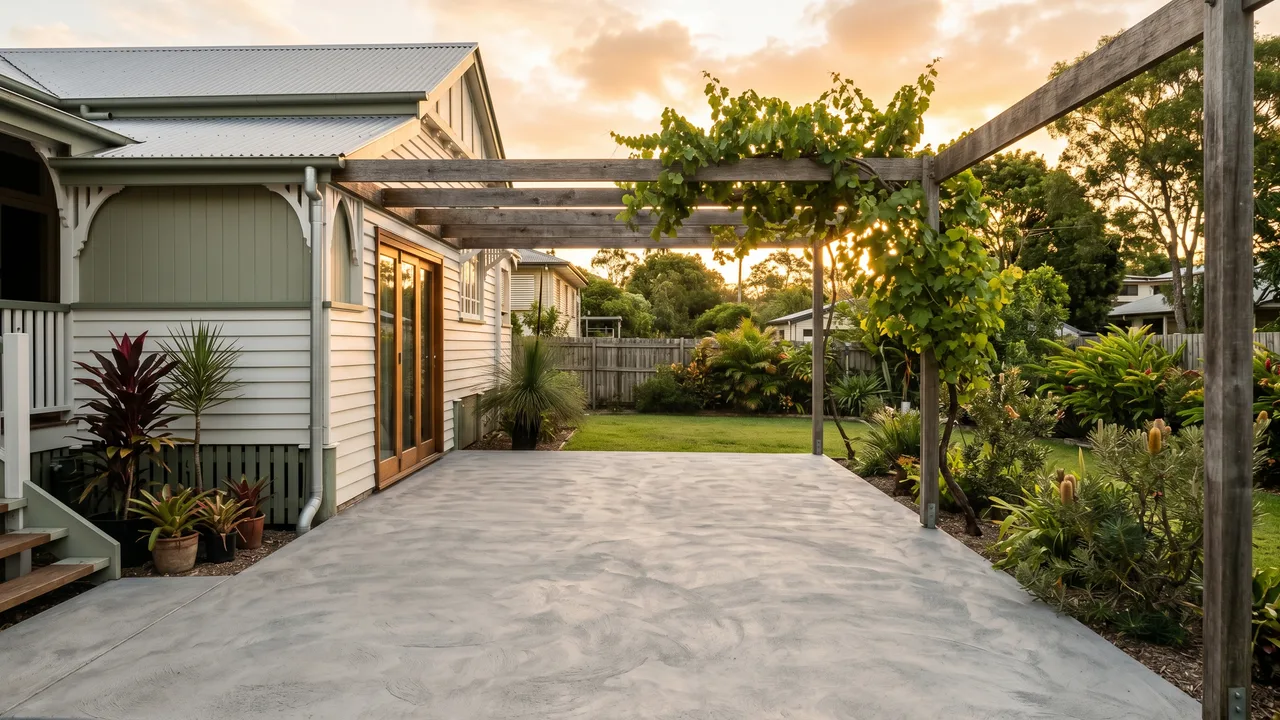
A well-poured alfresco or entertaining slab gives you a flat, durable surface for outdoor furniture, a BBQ setup, or a covered patio. In Hemmant and the surrounding Bayside suburbs, it's one of the more common concreting jobs — the combination of warm weather, outdoor-living culture, and relatively generous block sizes means a lot of homes here either already have one or want one.
This page covers what the work actually involves, what it costs locally, and how to tell whether this is the right job for your situation.
What the Work Involves
Pouring an alfresco or entertaining slab is not just a matter of ordering concrete and tipping it out. A proper job follows a clear sequence.
Site prep comes first. The area is excavated to the right depth (typically 100mm for a residential entertaining slab, though this varies by soil and load expectations). The ground is compacted with a plate compactor. Formwork (timber boxing) is set up to hold the concrete in shape.
Reinforcement is laid next. Steel mesh (SL72 or SL82 class, as a rule of thumb) sits on bar chairs so it ends up correctly positioned within the slab, not resting on the dirt. Some jobs call for additional rebar around edges or where posts will be footings.
Pouring and finishing follows. Concrete is typically delivered by a ready-mix truck, or for smaller jobs sometimes a trailer or on-site mix is used. The concrete is screeded level, then finished to the agreed surface. Common finishes for entertaining areas include broom finish (practical, slip-resistant), exposed aggregate, or a smooth-trowel finish if you want a cleaner look under a covered area.
Drainage and fall matter on Bayside properties. A slab that holds water is a slab with problems. Good concreters set a slight fall away from the house (typically 1:100 at minimum) so rainwater moves off without pooling against your wall or under a sliding door threshold.
Curing takes time. Properly hydrated concrete needs around a week before light foot traffic, and ideally 28 days before you load it with heavy furniture or a built-in BBQ island.
When Hemmant Homeowners Typically Need This
- You're building a new alfresco extension and the existing ground is bare or has an old, cracked timber deck you're removing.
- Your current patio area is cracked, sunken, or has persistent drainage issues.
- You're installing a pergola or roofed structure and need a proper footing-integrated slab rather than just paving.
- You're renovating and want to extend an existing slab to enlarge your entertaining space.
There's no strict season for this work in Brisbane, but many homeowners book in late autumn or winter (May through August) when the ground is firmer and the heat is less of a factor for curing. Wet season (December through February) can complicate scheduling and ground conditions, so it's worth planning ahead if you want a spring or summer finish.
What It Costs in Hemmant
Typical residential entertaining slabs in the Bayside area generally fall somewhere between $2,500 and $8,000 for a standard job. A few factors move that number significantly.
Size is the most obvious one. A modest 4m x 4m pad sits at the lower end. A large wraparound entertaining area of 60 to 80 square metres is a different proposition.
Access matters in Hemmant and nearby suburbs. Homes on corner blocks or with rear lane access are easier to concrete. Properties where the truck can't get close mean pumping costs or wheelbarrow labour, which adds to the price.
Ground conditions vary across this part of Brisbane. Some areas have clay-heavy soil that needs more work to compact and may require deeper excavation or extra base material.
Finish type affects cost. A plain broom finish is the most economical. Exposed aggregate (which we also offer as a separate service) costs more because of the additional materials and labour to wash and expose the aggregate.
What's usually included in a quote: excavation, formwork, mesh reinforcement, concrete supply and pour, finishing, basic clean-up.
What can be extra: tree root removal, hauling away significant amounts of old concrete or fill, pumping fees if truck access is limited, drainage channel installation, and any decorative sealing.
Always ask what's included before you sign off on a price.
Is This the Right Service for Your Property?
This service suits you if you're starting from raw ground or removing an existing structure and want a fresh slab poured. If you already have a concrete slab that's just cracked or surface-worn, concrete resurfacing may be a better-value option. If you're adding a garden path or access way rather than an entertaining area, the paths and footpaths service is the more appropriate starting point.
For properties close to the bay in Manly or Wynnum, salt air is a real factor. A good concrete mix and proper sealing extends the life of a slab in coastal conditions considerably.
A Note on Licensing and Insurance
Concreting work over a certain value threshold in Queensland requires a contractor's licence. For a job like this, make sure whoever you're engaging holds a current QBCC (Queensland Building and Construction Commission) licence and carries public liability insurance. It's reasonable to ask for both before work starts. We connect homeowners with providers who meet these requirements, but confirming directly with your contractor is always a sensible step.
Ready to Get a Quote?
If you've got a rough idea of the area you want concreted and where your property sits in Hemmant or the Bayside cluster, that's enough to get a useful conversation started. A quick call or message with those basics means we can connect you with a local concreter who can come out, assess the ground conditions, and give you a written quote.
Quick answers
Frequently asked.
How thick should an alfresco slab be in Hemmant?
How long does it take to pour an alfresco slab?
Do I need a building permit for an alfresco slab in Brisbane?
What finish is best for an outdoor entertaining slab near the bay?
Can you extend an existing alfresco slab rather than replace it?
What's the difference between this service and concrete resurfacing?
Ready to book
Quickest is by phone.
Up-front pricing on the call. Booked in one go. No site visit needed.