Concreting
Concrete Resurfacing Hemmant.
Restore What's There Instead of Starting Over
Concrete resurfacing is exactly what it sounds like: laying a new bonded layer over your existing slab rather than breaking it out and starting from scratch. In Hemmant and across the Bayside suburbs, this is a genuinely practical option when a driveway, path or entertaining area is looking tired but the slab underneath is still structurally sound.
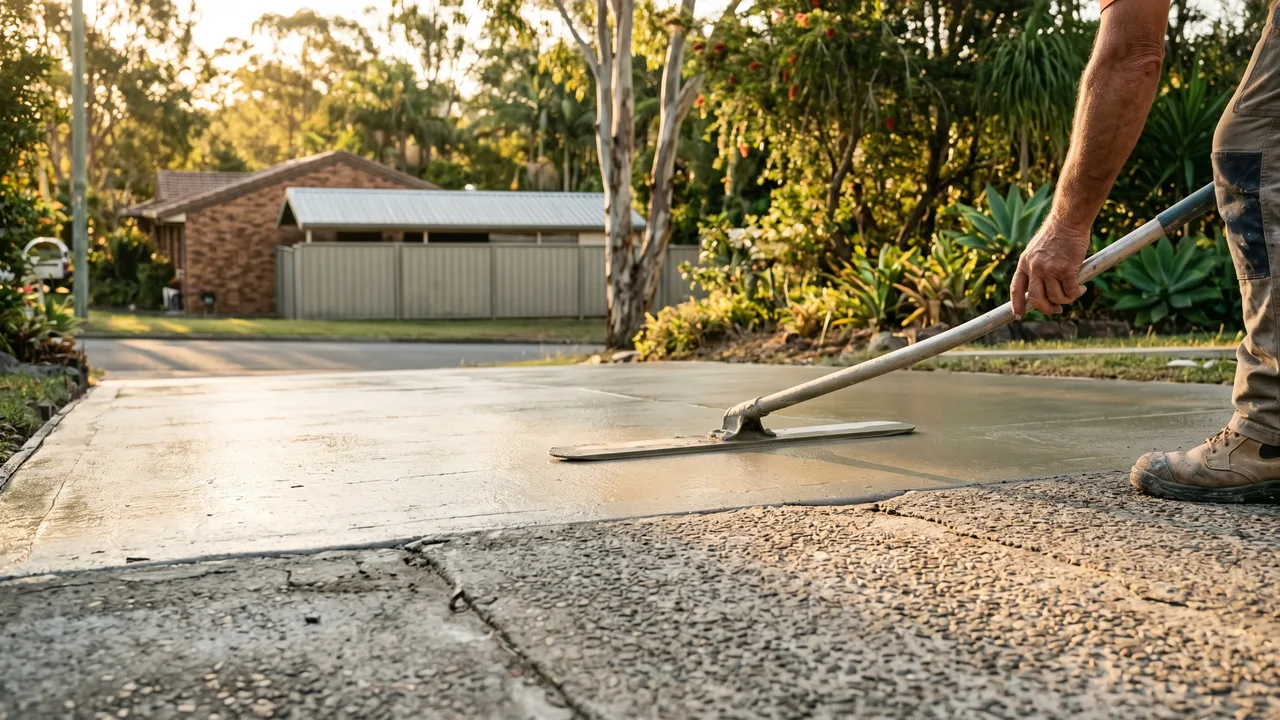
The physical work involves cleaning the existing surface thoroughly (typically with a pressure washer and sometimes a chemical degreaser), grinding or scarifying the concrete to open up the pores, filling any cracks or low spots with a patching compound, then applying a polymer-modified resurfacing overlay. That overlay is usually 2-4 mm thick. Depending on the finish you choose, it may be broomed, trowelled smooth, or stamped to replicate a patterned look. A sealer goes on last to protect the surface and give it some sheen.
Equipment on a typical job includes an angle grinder or small scarifier, a mixing drill, and a pump or roller for the sealer. It is not a shovel-and-barrow job. Getting the surface prep right is most of the work, and rushing it is why resurfacing fails.
Signs Your Hemmant Slab Needs Resurfacing
You're probably looking at the right service if you notice:
- Surface crazing or spider-web cracking across the top layer, common in older driveways that copped the sun before good UV-stable sealers existed
- Pitting and spalling, where small chunks of the surface have popped off, often from salt-air exposure (Hemmant sits close to the bay, and salt in the air accelerates surface deterioration on unsealed concrete)
- Staining from oil, rust or mould that has penetrated beyond what cleaning alone will fix
- A rough, chalky texture that collects dirt and is hard to hose down
- Minor surface cracks (hairline to about 3 mm wide) that are cosmetic rather than structural
There's no fixed schedule for resurfacing the way there is for, say, sealing a roof. Most residential concrete surfaces in this part of Brisbane last 10-20 years before resurfacing becomes worthwhile, though salt-air exposure near the water can shorten that window noticeably.
When Resurfacing Is Not the Right Answer
This matters. Resurfacing is a surface fix. It will not correct a slab that is moving, heaving, or has large structural cracks (typically anything wider than about 5 mm or cracks that show vertical displacement). If tree roots from a neighbours's poinciana or a council fig have lifted sections, the cause needs to be dealt with first. In those cases, a full break-out and re-pour is likely the honest recommendation.
A good way to do a quick check yourself: press on either side of a crack. If one side flexes or sits higher than the other, the slab may have a structural issue. Flat, stable cracks are usually just surface movement.
What It Typically Costs in Brisbane
For residential jobs in the Hemmant and Bayside area, resurfacing typically runs $30-$70 per square metre, depending on the finish and the condition of the existing surface. A standard driveway of around 40-50 m² would usually sit somewhere in the $1,500-$3,000 range. A small entertaining area or path can come in under $1,500.
Prices move up when:
- Heavy crack filling is needed before the overlay goes down
- The existing surface has oil contamination requiring chemical treatment (common in older garages and workshop slabs)
- You choose a decorative finish (stamped or stencilled overlays cost more than a broomed finish)
- Access is tight, for instance a narrow side path or a slab behind a gate that can't be driven through with a mixer
Prices move down when the slab is in good nick, access is easy, and you're going with a plain broomed finish.
What's Usually in the Quote vs What's Extra
A quote for resurfacing should typically include surface preparation, the overlay material, and one coat of sealer. Ask specifically whether crack filling and patching is included or priced separately, because that can add a few hundred dollars on a heavily damaged slab. Disposal of any material scraped off the old surface is usually minor but worth confirming.
Landscaping adjustments, repainting kerb numbers, or re-marking garage lines are generally not included.
Licences, Insurance and Qualifications
In Queensland, concrete resurfacing sits within the general building and concreting trades. For most residential resurfacing work, a contractor's licence is not strictly required in the same way it is for structural work, but it is reasonable to ask any tradesperson you engage whether they carry public liability insurance. Reputable operators will have it.
We connect Hemmant homeowners with local concreters who work in this area regularly. If you'd like to talk through whether your slab is a good candidate for resurfacing before committing to anything, that's exactly the kind of conversation worth having early.
Quick answers
Frequently asked.
How long does concrete resurfacing last in Hemmant?
Can you resurface concrete that has oil stains from a car or workshop?
Is concrete resurfacing cheaper than replacing the slab?
How do I know if my slab is structurally sound enough to resurface?
What finish options are available with concrete resurfacing?
How long after resurfacing can I use my driveway or path?
Ready to book
Quickest is by phone.
Up-front pricing on the call. Booked in one go. No site visit needed.