Concreting guide
Should you replace your concrete driveway or just resurface it?
The Short Answer First
If your driveway has surface wear, minor cracking or faded colour, resurfacing is almost always the smarter spend. If the slab itself is moving, crumbling or has cracks wider than about 5 mm, replacement is the honest answer. The decision really comes down to what is wrong underneath, not just what you can see on top.
What "Resurfacing" Actually Means (and What It Doesn't Fix)
Concrete resurfacing means applying a thin bonded layer (typically 3–10 mm) of polymer-modified cement or a specialised overlay product over the existing slab. Done well, it can make a tired, stained or lightly cracked driveway look almost new. Costs in the Bayside Brisbane area typically run $30–$80 per square metre depending on the prep work, the finish chosen and whether crack repairs are needed first. Compare that to full replacement, which generally lands somewhere between $80–$130 per square metre once formwork, reinforcement, removal of the old slab and finishing are included.
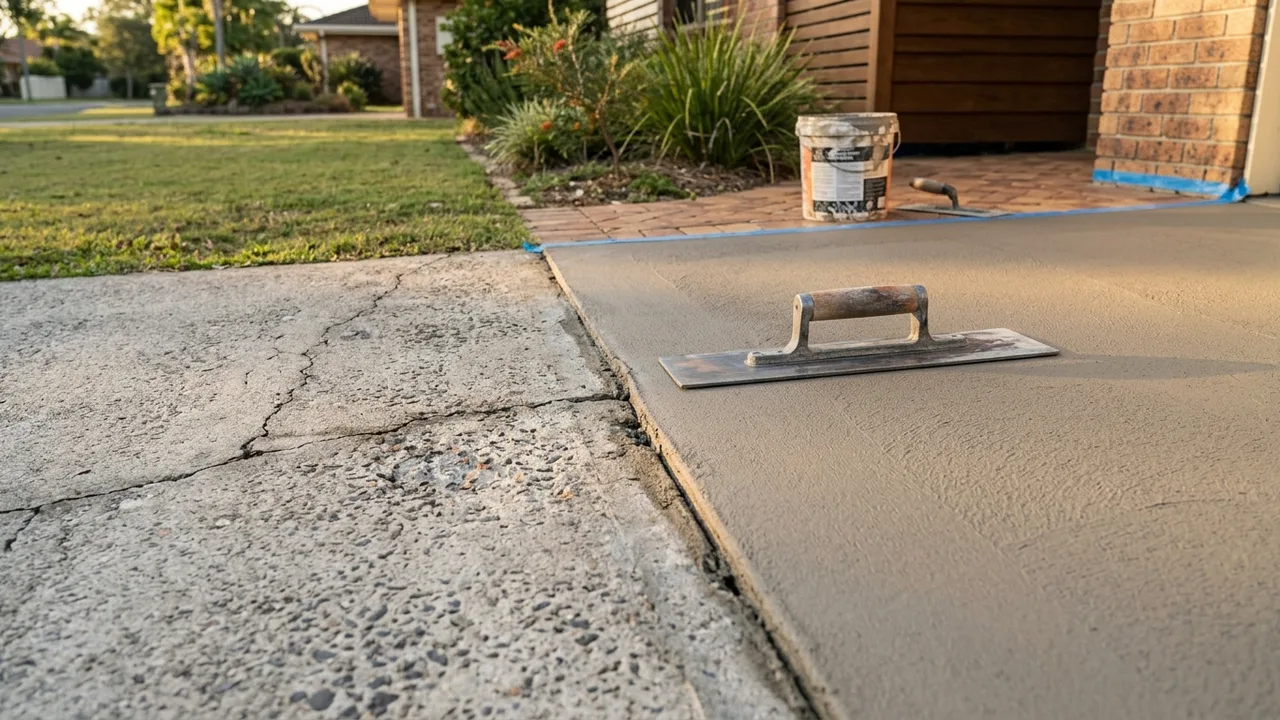
The catch is that resurfacing is a cosmetic and surface-structural fix. It does not correct problems in the base or sub-base. If your concrete has settled unevenly because of soil movement underneath (very common in parts of Hemmant, Wynnum West and Lota where reactive clay soils are widespread), putting a fresh overlay on top just delays the inevitable. You will resurface, it will crack again, and you will have spent money twice.
Signs That Resurfacing Is the Right Call
These are the situations where a resurfacing job makes practical sense:
- Surface scaling or spalling (the top layer flaking away, often caused by years of sun, leaf stain or pressure washing abuse). The substrate is fine; it just needs a new wearing surface.
- Fine crazing or hairline cracks with no movement. If you can run your fingernail across a crack and neither edge is higher than the other, the slab is stable.
- Faded or stained appearance that detracts from the front of the house. In Brisbane's harsh UV, plain grey concrete can look washed out or blotchy within 8–10 years.
- Rough texture that has become a nuisance to clean or looks dated. Resurfacing lets you change the finish, including brushed, stencilled or even a light exposed aggregate (photovoltaic (PV) solar reflective coatings are also available, though overkill for most driveways).
- Slippery surfaces near the street or in shaded areas where algae takes hold. A textured overlay can improve grip noticeably.
One honest note: resurfacing products vary considerably in quality. A cheap job with inadequate surface preparation will peel within a couple of years, especially in the heat and salt-laden air that bayside suburbs like Manly and Wynnum experience. Ask any contractor how they are preparing the surface before you sign anything.
Signs That Replacement Is the Right Call
Some problems cannot be overlaid away:
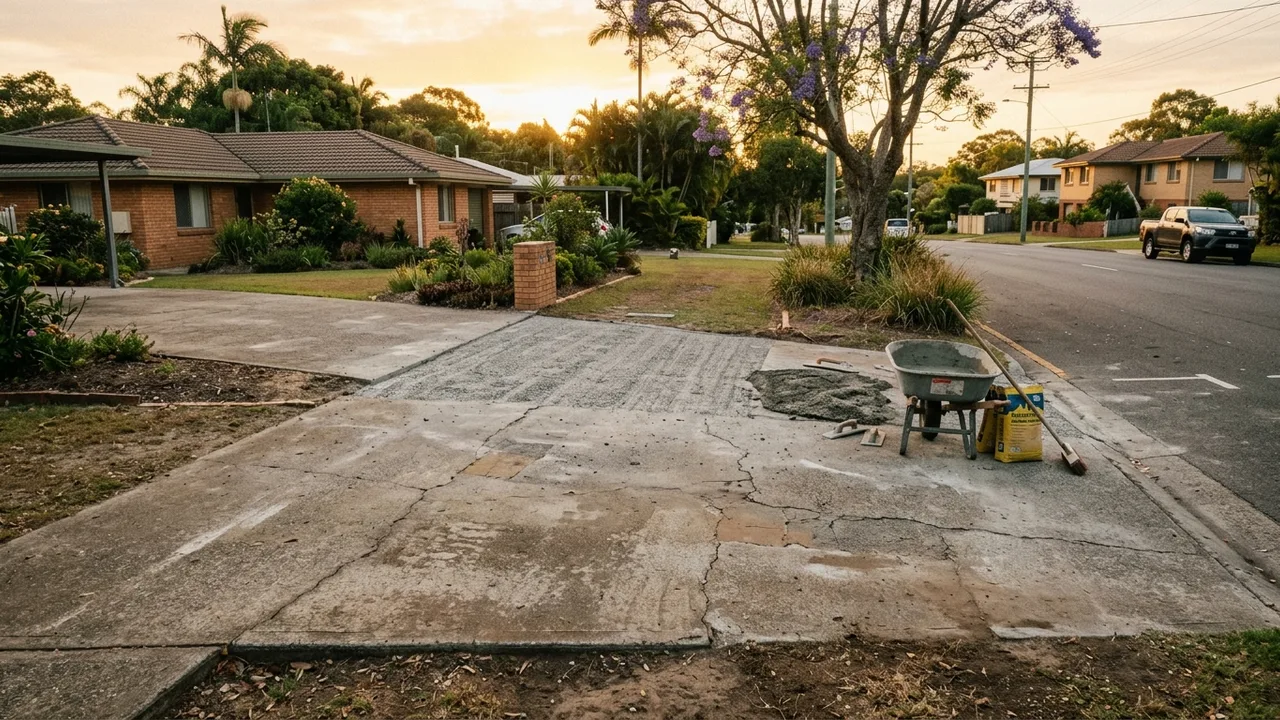
- Structural cracks with vertical movement. If one side of a crack is higher than the other, the slab has moved. This typically means sub-base failure or soil heave.
- Cracks wider than about 5 mm, or cracks that have grown over time. Width is a rough guide only, not a rule, but significant cracking that has been getting worse suggests ongoing movement.
- Sunken or raised sections. Even by 10–15 mm, differential settlement creates a trip hazard and signals that what is underneath is not stable.
- Crumbling or "honeycombed" concrete. If the aggregate is exposed because the paste has deteriorated, the slab no longer has the integrity to bond properly with an overlay.
- Drainage problems baked into the slab design. If your driveway falls the wrong way, water pools against your garage door or house slab. No overlay changes that. Only a new pour with corrected falls solves it.
- Age beyond roughly 30–40 years in original condition. Older slabs in suburbs like Hemmant and Wynnum were often poured thinner and with less reinforcement than current practice. They may hold up fine, but they may also be near the end of a practical service life.
Replacement also makes sense if you are changing the driveway layout, adding a second bay, widening for an extra vehicle, or upgrading from an old single-width strip to a full slab. You cannot resurface a different shape into existence.
The Brisbane-Specific Bit: Soil, Salt and Sub-Tropical Weather
Brisbane's Bayside suburbs present a specific set of conditions that matter here.
Reactive clay. Hemmant, Wynnum West and parts of Lota sit on expansive clay profiles. Dry summers shrink the clay; wet seasons swell it back. This cyclical movement is the primary reason driveways in these suburbs crack more than in, say, inner-city suburbs on rock or sandy soils. If you resurface over a slab that is sitting on moving clay with no remediation underneath, expect the overlay to crack within a few years.
Salt air. Wynnum, Manly and Lota are genuinely bayside. Salt in the air accelerates concrete deterioration, particularly scaling and surface breakdown. It also affects the bonding of some resurfacing products. A contractor who understands coastal concrete (and uses appropriate sealers) is worth more than the cheapest quote.
Sub-tropical heat and UV. Brisbane's sun loads are punishing. Dark-coloured concrete and overlay products can reach 60°C+ on a January afternoon, which stresses the bond between an overlay and the substrate below. Light-coloured or UV-stable finishes tend to last better here.
Tree roots. Poinciana, fig and jacaranda roots are notorious around older properties in Wynnum and Manly. If roots are the cause of cracking, resurfacing alone will not help. You may need root management or a replacement slab with saw cuts in the right places to control where cracking occurs.
A Rough Cost Comparison for a Typical Residential Driveway
For a double-width driveway of around 40–50 square metres, typical ballpark figures in the Bayside area are:
- Resurface only (good prep, quality overlay): $2,000–$4,000
- Resurface with crack repairs and sealing: $2,500–$5,000
- Full replacement (remove, re-pour, standard finish): $5,000–$9,000
- Full replacement with exposed aggregate finish: $7,000–$12,000
These are rough guides, not quotes. Site-specific factors (access, existing slab thickness, concrete pump needed, tree roots) all move the number. Get at least two detailed written quotes, and make sure they specify what prep work is included.
The payback logic is simple: if resurfacing gives you 8–12 good years on a slab that is otherwise structurally sound, it is genuinely good value. If it gives you 3–4 years before the same cracks reappear, you would have been better off replacing it the first time.
How to Make the Call With Confidence
Before you decide anything, get someone to look at the slab honestly. A few things you can assess yourself:
- Walk the whole driveway and look for uneven edges at every crack. Use a straight edge if needed.
- Pour a bucket of water across the surface. Watch where it goes. Pooling near the house is a drainage problem.
- Check the edges. If the slab is crumbling at the edges or pulling away from the house, it has structural issues.
- Look under the edges if you can. A gap between the slab and the base underneath indicates settlement.
If everything passes those checks and the problems are surface-level, resurfacing is probably right for you. If anything fails, get a concrete contractor to assess whether the sub-base needs attention before any decision is made.
A good local contractor will tell you honestly which option suits your slab. If someone jumps straight to "you need a full replacement" on a driveway that just looks tired, ask them to explain specifically why resurfacing is not viable. The answer should be concrete (pun intended), not vague.
If you are in Hemmant, Wynnum, Manly, Lota, Wynnum West or Manly West and want a straight opinion from someone who has seen the local conditions, we can connect you with a concreter who works in this area regularly. No obligation, just a proper look at what you are dealing with.
Quick answers