Concreting guide
Hemmant's soil and flood history change how concrete is laid here
Why Hemmant's Ground Conditions Are Not the Same as Everywhere Else in Brisbane
Hemmant's soil is expansive clay, and parts of the suburb sit inside a recognised flood overlay. Those two facts, together, mean concrete laid here needs a different approach than you'd use in Kenmore or Carindale. If a concretor quotes you a job without asking about your soil type or checking the council overlay maps, that's worth a conversation before you sign anything.
This isn't about scaring you off a driveway or a shed slab. It's about understanding what the ground beneath your property is doing, so the concrete on top of it lasts.
The Soil Underneath Hemmant
Most of eastern Brisbane, including Hemmant and the broader Bayside cluster, sits on Quaternary alluvial deposits. In plain terms, that's sediment laid down by rivers over thousands of years. It tends to be fine-grained, moisture-sensitive, and prone to movement.
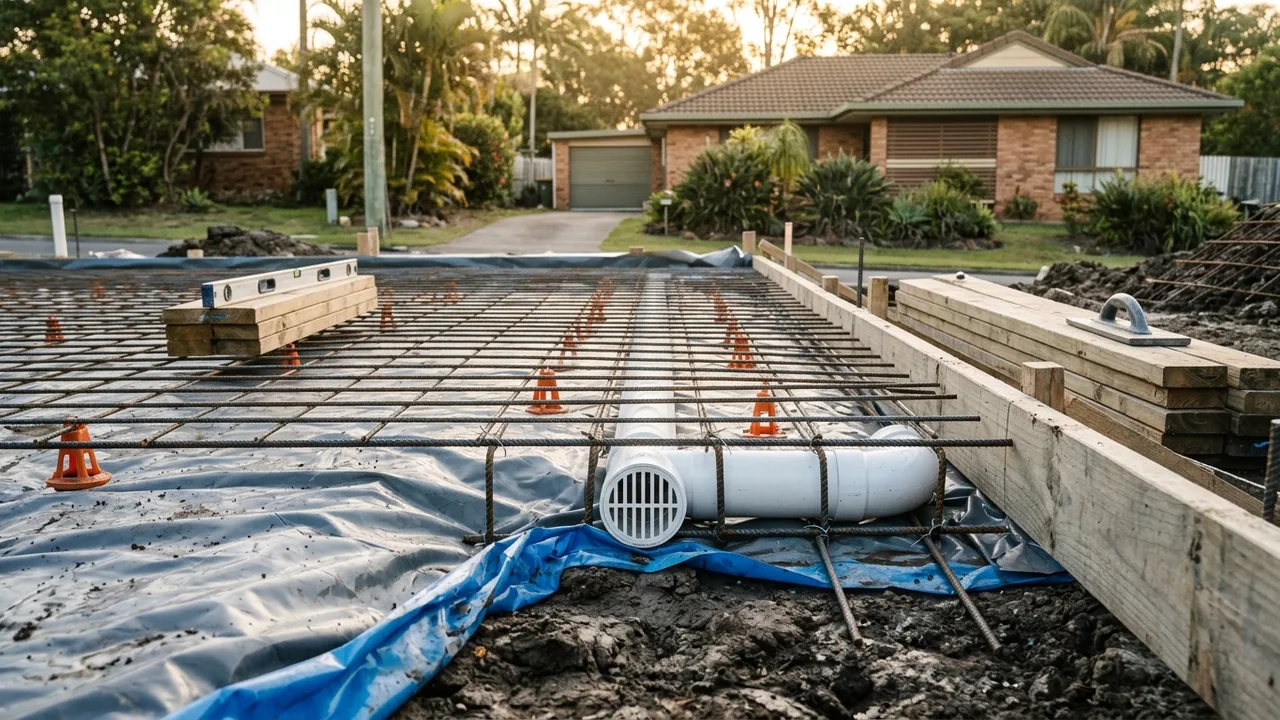
The specific concern with clay-heavy soil is shrink-swell behaviour. When it dries out (typically in a long dry spell, or near a tree drawing moisture), the ground contracts. When it gets wet, it expands. A concrete slab sitting on top of that cycle is under constant stress, even when you can't see it happening.
In Hemmant specifically, proximity to the Port of Brisbane corridor and the creek systems feeding into Moreton Bay means some properties also have fill material on site. Fill isn't inherently a problem, but poorly compacted fill beneath a slab is one of the more common reasons concrete cracks prematurely. It settles unevenly, and the concrete follows.
If your property has had any earthworks in the last few decades, or if you're building on the lower parts of the suburb near the creek, asking your concretor whether a compaction test or even a basic geotechnical assessment is warranted is a reasonable question. For a large garage slab or driveway, it can save you from resurfacing costs down the track.
The Flood Overlay and What It Actually Means for Concrete Work
Parts of Hemmant fall under Brisbane City Council's flood overlay, particularly areas near Schulz Canal and the lower-lying pockets towards the bay. You can check your specific property on the Brisbane City Plan mapping tools.
The flood overlay doesn't necessarily stop you from laying concrete. What it does is change some of the design decisions.
Drainage is the first consideration. A concrete surface is impermeable. On a property in or near a flood-affected area, a poorly drained slab or driveway can redirect water toward your home or a neighbour's, or it can pond and sit against a footing long enough to cause problems. Concretors working in this area typically need to think carefully about falls (the deliberate slope built into a surface), channel drains, and where that water goes once it leaves your concrete.
Slab height can matter too. If your property is in a designated flood zone, council may have requirements about finished floor levels. For a shed slab or garage slab, that could mean the concrete needs to sit at a specific height relative to the natural ground level. This isn't something every residential concretor deals with daily, so it's worth confirming they've worked in flood overlay areas before.
Salt and moisture exposure is an added consideration in Hemmant and the broader Bayside area. You're close enough to the bay that salt-laden air and occasional saltwater inundation are real factors. Concrete mix design for Bayside properties often incorporates a lower water-to-cement ratio and, in some cases, a Type SR (sulphate-resisting) cement to improve durability. This matters most for footings and surfaces that stay damp.
Reinforcement: What's Standard and What's Worth Upgrading
A basic residential concrete slab in Brisbane is typically reinforced with a layer of steel mesh (SL72 or SL82 are common grades in domestic work). That's fine for a straightforward patio or garden path on stable ground.
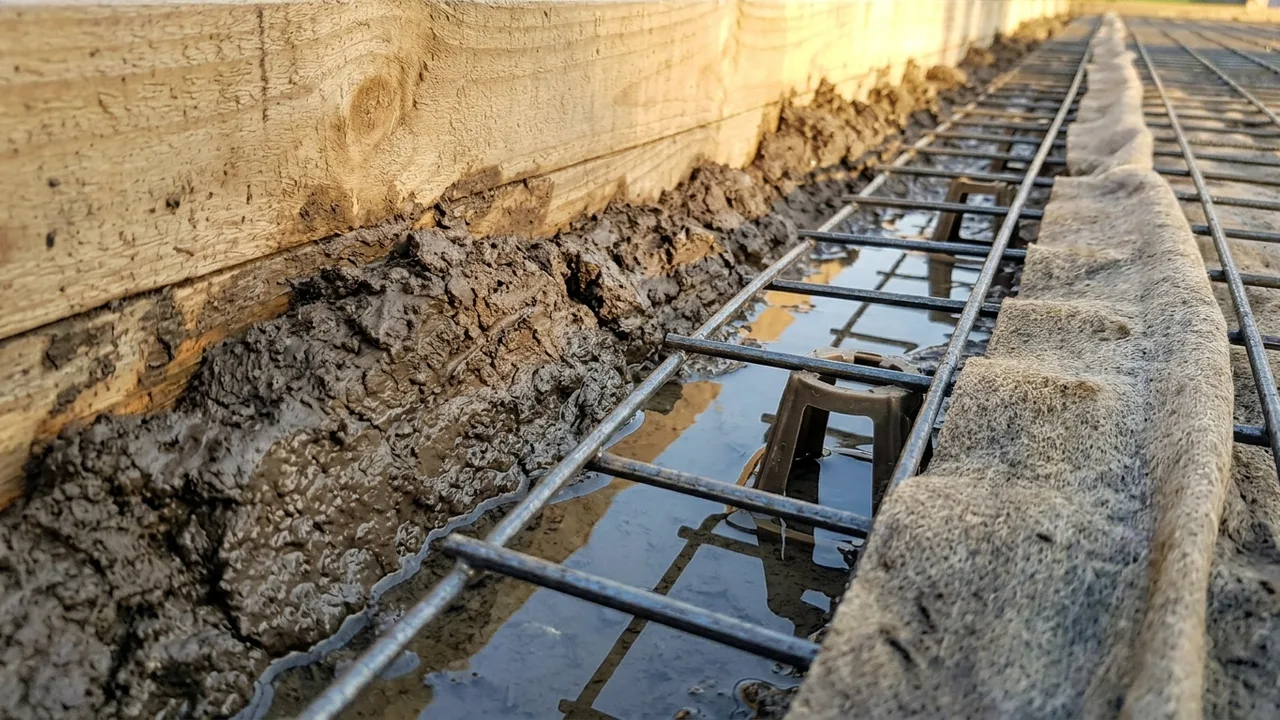
For Hemmant properties on expansive clay or fill, there's a reasonable argument for upgrading. Options include:
- Heavier mesh (SL92 or even D-mesh) for larger slabs
- Steel reinforcing bar (rebar) rather than mesh, particularly for driveways taking vehicle loads
- Post-tensioned slabs for larger or more complex pours, though this is less common in residential work and adds cost
- Thicker concrete sections at edges and around control joints
The trade-off is straightforward: heavier reinforcement costs more upfront. A standard driveway in the $4,000 to $8,000 range might add $400 to $900 for upgraded reinforcement, depending on the size and mix. That's usually worth it when the alternative is crack repair in five years, which can run $600 to $2,000 depending on severity.
Control joints (the deliberate cuts made in concrete to control where cracking happens) are also worth discussing. On a longer driveway or large slab, well-placed control joints don't weaken the concrete; they give it somewhere to move without cracking randomly across the middle of the surface.
Exposed Aggregate and Decorative Finishes in a Flood-Adjacent Context
A fair number of Hemmant homes opt for exposed aggregate concrete on driveways and patios. It looks good, it provides some texture underfoot which helps with grip when wet, and it holds up reasonably well in a coastal environment.
The thing to know about exposed aggregate in flood-adjacent areas is that any standing water after heavy rain can carry silt into the open texture of the surface. Over time, and especially if the drainage fall isn't quite right, that can stain or partially fill the aggregate. It's not a structural problem, but it does affect appearance.
A proper sealant applied after the pour (and reapplied every few years) helps significantly. In the Bayside salt-air environment, sealing exposed aggregate is worth doing regardless of flood considerations. It protects the paste and slows down the wear that salt and UV together cause.
Retaining Walls on Sloped Bayside Blocks
Not all of Hemmant is flat. Some blocks, particularly towards the edges of the suburb, have enough slope to warrant a retaining wall before you can lay a usable slab or entertaining area. In flood-adjacent ground, retaining walls have an added complication: hydrostatic pressure.
When saturated soil pushes against a retaining wall, the pressure is significant. Walls built without adequate drainage behind them (aggregate backfill, agricultural drainage pipe, weep holes at the base) can bow, crack, or fail. Poured concrete walls and concrete block walls can both be built to handle this, but the drainage design matters as much as the wall itself.
If you're on a sloped block and the previous owners had a timber retaining wall that has seen better days, replacing it with poured concrete is generally a solid upgrade in this environment. Timber retaining walls near clay soil and periodic wet conditions don't have a great track record for longevity.
What to Ask Before You Book a Concretor in Hemmant
You don't need to become a geotechnical engineer before you get a driveway. But a few pointed questions will help you work out whether the person quoting you has thought about the specific site:
- Have you worked on properties in Hemmant or the Bayside cluster before?
- Have you checked the flood overlay for this property?
- What mix design are you specifying, and what's the compressive strength?
- How are you handling drainage falls?
- What size and placement are you using for control joints?
- Is the base compacted, and how?
A good concretor won't be put off by these questions. If someone gives you a flat quote without walking the site or asking about soil conditions, that's worth weighing up.
The honest reality is that most residential concrete in Hemmant goes in without incident when these basics are observed. The problems tend to turn up when a job is priced on speed and the site-specific details are treated as someone else's problem.
If you'd like to talk through your specific job and get connected with a concretor who works regularly in Hemmant and the surrounding Bayside suburbs, that's exactly what this service is here for.
Quick answers