Concreting guide
How long should a concrete driveway last in Brisbane's climate?
A well-laid concrete driveway in Brisbane should last somewhere between 25 and 40 years. That said, the bayside suburbs — Hemmant, Wynnum, Manly and surrounds — throw a few extra variables at concrete that inland areas don't have to deal with.
What the numbers actually mean
That 25-to-40-year range isn't plucked from thin air. It reflects what concreters and civil engineers typically cite for residential flatwork in subtropical Australian conditions, assuming reasonable workmanship and basic maintenance. The lower end of that range tends to apply to driveways that were poured thin, used low-strength mix, or have gone years without sealing. The upper end belongs to slabs that were done right the first time and had a little care along the way.
What it doesn't mean is that a 30-year-old slab will suddenly crumble. Concrete degrades gradually. You'll usually see surface crazing, then cracking, then joint breakdown, long before structural failure becomes a real concern.
How Brisbane's climate specifically affects concrete
Brisbane sits in a humid subtropical zone. That matters for concrete in a few ways.
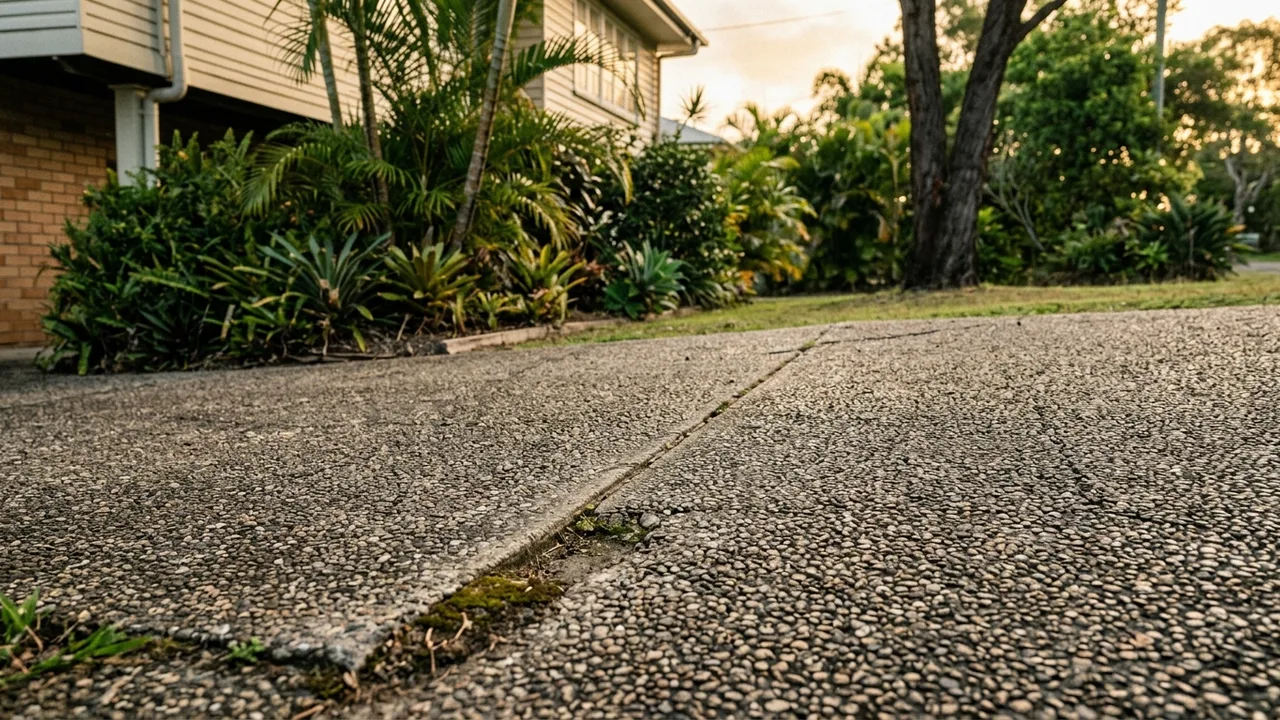
Thermal cycling. Summers regularly push past 35°C, and even in winter you'll get warm days followed by cool nights. Concrete expands and contracts with temperature. Over decades, that movement opens small cracks. For bayside suburbs like Manly and Wynnum, afternoon sea breezes help moderate surface temperatures somewhat, but the slabs still work hard through summer.
Rainfall intensity. Southeast Queensland doesn't get rain gently. When it rains, it often comes in heavy bursts. Water that sits on or near a driveway, especially if drainage is poor, works into any crack and accelerates deterioration. The 2022 flood event showed just how much hydrostatic pressure Brisbane soils can experience. In low-lying parts of Hemmant near the river, that's a genuine consideration.
Salt air. This one is specific to the bayside cluster. Properties within a kilometre or two of Moreton Bay, particularly in Manly and Lota, get meaningful salt air exposure. Chloride ions from salt can penetrate concrete and, if steel reinforcement is present (as it typically is in a driveway slab), eventually cause the steel to rust and expand. That expansion is what causes the dramatic spalling (surface chunks breaking away) you sometimes see on older coastal driveways. It's not inevitable, but it does mean bayside driveways benefit more from quality sealing than a comparable slab in, say, Kenmore.
Tree roots and soil movement. Inner bayside suburbs have mature trees. Jacarandas, poincianas, Moreton Bay figs — all of them capable of undermining a driveway slab if roots find their way underneath. Reactive clay soils, common throughout Brisbane, also shrink and swell with moisture changes, which puts stress on slabs from below. This is probably the single biggest cause of premature cracking in Brisbane residential concrete.
What good installation actually looks like
The lifespan gap between a 20-year driveway and a 35-year driveway often comes down to decisions made on day one.
Thickness. A standard residential driveway is typically poured at 100mm thick. If you have a heavy vehicle, a trailer, or a large ute, going to 125mm is worth the extra cost. The additional concrete on a standard double driveway might add $300-$600 to the job, which is trivial against the overall lifespan.
Mix strength. For Brisbane residential driveways, a 25 MPa (megapascal) mix is the common minimum. In bayside locations with salt air exposure, some concreters recommend stepping up to 32 MPa. The cost difference per cubic metre is modest, and the durability gain is real.
Reinforcement. A single layer of SL72 or SL82 steel mesh (or deformed bar, depending on design) is standard. Mesh placed at the correct height within the slab, not sitting on the ground, actually does its job. This sounds obvious but placement errors are a common source of premature cracking.
Joints. Control joints are the deliberate lines cut or formed into a slab to guide where cracking happens. A slab without proper jointing doesn't avoid cracking; it just cracks randomly. For a driveway in Brisbane's reactive clay conditions, getting joint spacing right is important.
Curing. Concrete gains strength through a chemical process, not just by drying. In Brisbane's heat, fresh concrete needs to be kept moist or covered for at least three to seven days. A slab that dries too fast in December heat will be weaker throughout its life.
Maintenance: what actually makes a difference
Concrete is often described as "low maintenance" and that's mostly true, but "low" isn't the same as "zero."
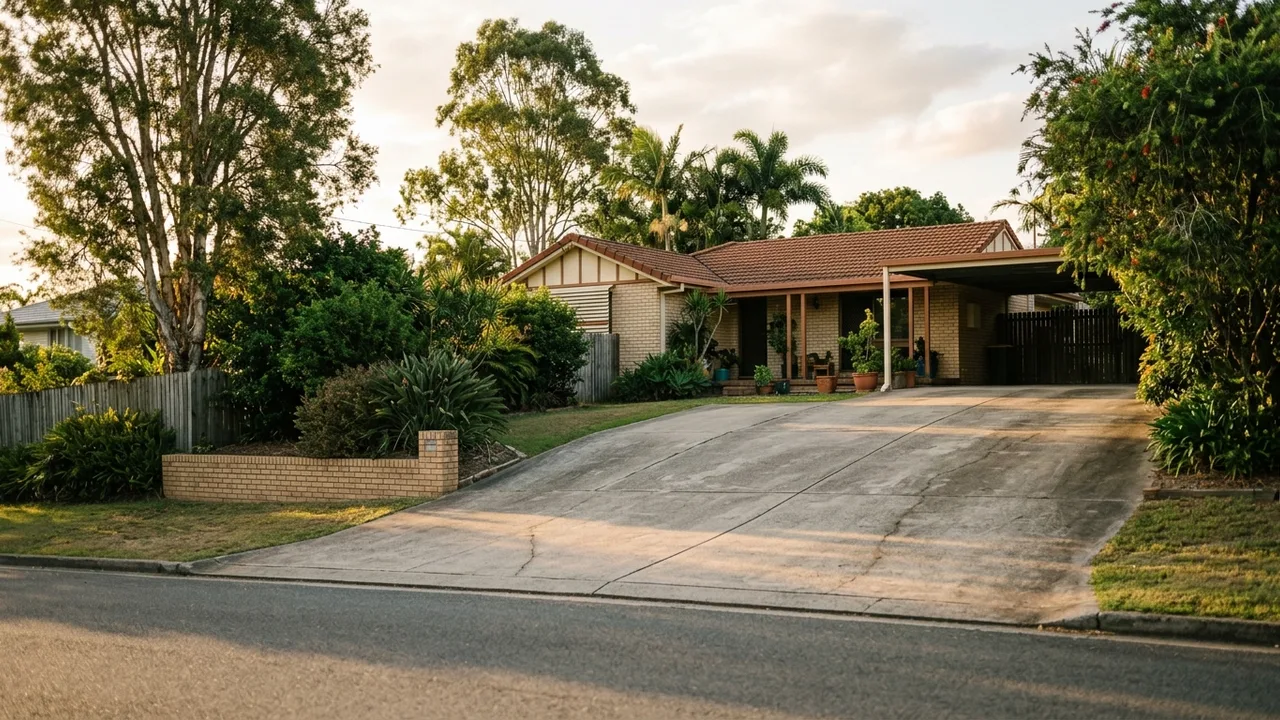
Sealing is the highest-return maintenance task. A penetrating concrete sealer applied every five to eight years keeps moisture and salt from working into the slab. For bayside driveways, that interval is worth treating as closer to five years. The cost of a professional reseal on a double driveway is typically in the $200-$500 range. That's money well spent against the alternative of a full replacement.
Crack repair matters early. A crack 1-2mm wide is cosmetic and often stable. Left unsealed, it becomes a channel for water, then a wider crack, then a structural concern. Minor crack injection or flexible sealant costs very little if you address it promptly.
Cleaning is straightforward. Pressure washing a couple of times a year removes the organic buildup (algae, lichen) that holds moisture against the surface. In suburbs with large tree canopy cover, like parts of Wynnum West and Manly West, this matters more.
What you want to avoid: parking heavy machinery on an unsupported edge, letting downpipes discharge directly onto the slab, and ignoring subsidence (sinking) in a section of the driveway, which usually signals a drainage or soil problem underneath.
Signs that repair is smarter than replacement
Not every damaged driveway needs to come out. Repair makes sense when:
- Cracking is surface-level or limited to isolated sections
- The slab is fundamentally level and not subsiding
- The driveway is less than 15 years old
- The damage is cosmetic (staining, minor spalling, worn sealer)
Replacement makes more sense when:
- Multiple sections are cracked and heaving
- There's widespread spalling from reinforcement corrosion
- The original slab was poured too thin and has never performed well
- Significant tree root damage has disrupted large areas
In bayside suburbs with older housing stock, it's common to find driveways that were poured in the 1980s and are now approaching the end of their natural life. Resurfacing can extend things by five to ten years in some cases, but it's not a permanent fix over a compromised base.
A realistic cost perspective for bayside Brisbane
Replacing a standard double driveway (roughly 40-50 square metres) in the Hemmant-to-Wynnum corridor typically falls somewhere in the $4,000-$9,000 range, depending on site access, any demolition of the old slab, drainage requirements, and finish type. Exposed aggregate finishes (which also tend to be more slip-resistant) generally add $30-$60 per square metre to the base price.
Those numbers reflect what local jobs in this cluster tend to cost. They're not quotes, and every site is different, but they give you a useful ballpark for planning.
The honest trade-off is this: spending a little more on mix strength, thickness, and a quality sealer at installation costs less over 30 years than replacing a cheap driveway at the 15-year mark.
Closing thoughts
If your driveway was installed properly and you've given it basic care, 30-plus years in Brisbane's bayside climate is a reasonable expectation. If it was poured thin, never sealed, and has had tree roots working underneath it for two decades, the timeline shortens considerably.
The best thing you can do right now, especially if your driveway is showing early signs of wear, is get an eye on it from someone who works in this area regularly. A local concreter who knows Hemmant clay and Manly salt air will give you a more accurate read than any general guide can. If you'd like a connection to someone who fits that description, that's exactly what this service is here for.
Quick answers