Concreting guide
Can you pour your own concrete slab, or is it a job for a professional?
Can You Pour Your Own Concrete Slab?
Yes, technically you can pour a small concrete slab yourself. But whether you should depends on the size, the purpose, and how much you understand about what can go wrong. A 1.2 m x 1.2 m garden pad is a reasonable weekend project for a confident DIYer. A garage slab or a driveway is a different thing entirely, and getting it wrong is expensive to fix.
Here is an honest look at where the line sits.
What "Pouring a Slab" Actually Involves
Most people picture the pour itself. That is the easy part to picture, anyway. The real work happens before and after.
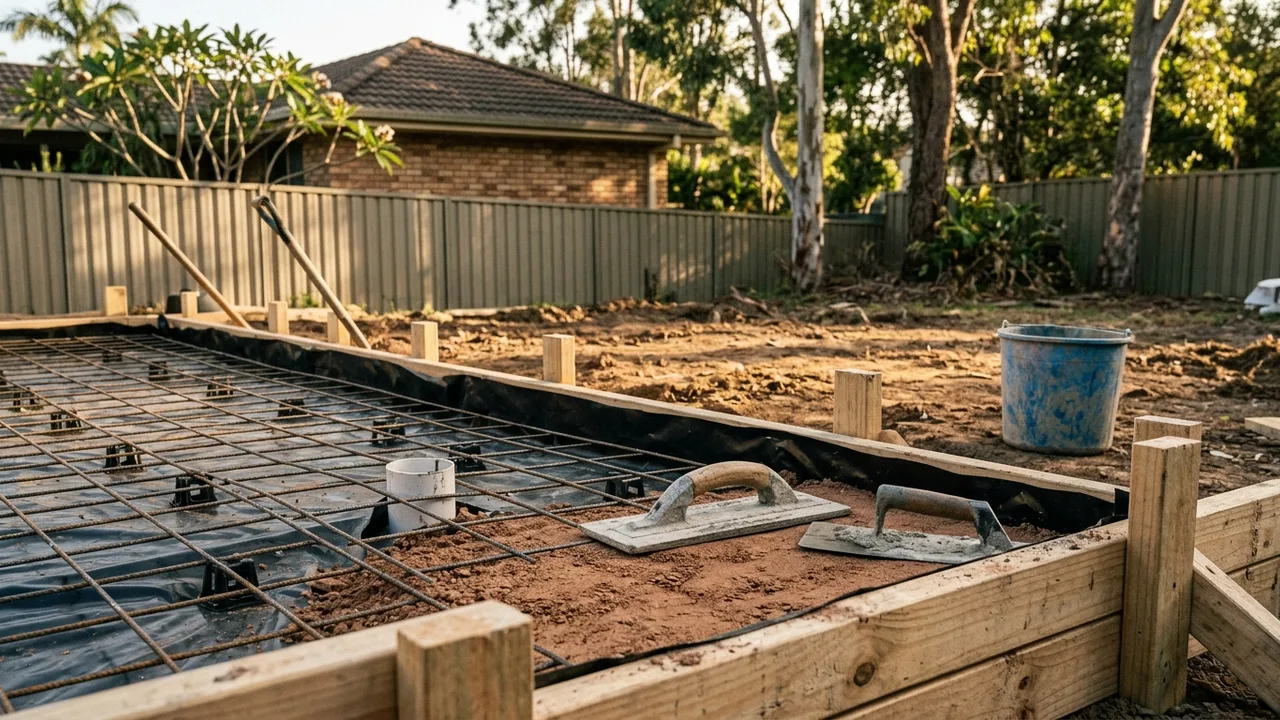
Before the concrete goes in, you need to:
- Set out and excavate to the right depth (typically 100 mm for a light-duty path, 100-150 mm for a driveway, deeper for a garage with vehicle loads)
- Compact the sub-base — loose or soft ground under concrete is the single most common cause of cracking
- Build formwork that is level, square, and strong enough to hold wet concrete without bowing
- Lay reinforcement — mesh or rebar, positioned correctly in the slab, not sitting flat on the ground
- Order the right mix — residential slabs in Brisbane typically use N20 or N25 mix; ordering the wrong strength wastes money or creates a weak slab
Then, once the truck arrives, you have a narrow window. Concrete starts to go off. You need enough people to screed, float, and finish the surface before that window closes. In Brisbane's summer heat, that window can be surprisingly short.
After the pour, you need to cure the slab properly, which usually means keeping it damp for at least three to seven days.
None of this is impossible for a capable DIYer. But each step has a way of going wrong if you have not done it before.
Where DIY Makes Sense (and Where It Does Not)
A small concrete pad, say for a garden shed base under about 10 m², is a fair candidate for DIY. You can mix by hand or hire a small mixer, and the stakes are low if the finish is not perfect.
Once you move past that size, the maths change. A 3 m x 6 m shed slab, for example, is 18 m² at 100 mm deep. That is roughly 1.8 cubic metres of concrete. You cannot mix that by hand in time. You would order a ready-mix truck, which typically comes with a minimum delivery charge, often around $600-$900 depending on the supplier. At that point you are spending real money, and the job needs to go right.
Where DIY tends to fall apart:
- Slabs with vehicle loads. A car weighs around 1,500 kg. Without correct reinforcement and compaction, the slab will crack.
- Sloped sites. Many blocks in Hemmant and Wynnum have some fall. Forming up on a slope, managing drainage, and getting a flat finish is significantly harder.
- Bayside sites near the water. Homes in Wynnum, Manly, and Lota are in a higher-exposure environment for salt air. The concrete mix and any reinforcement cover needs to account for that, or corrosion of the steel mesh will cause long-term cracking and spalling.
- Any slab that connects to the house. Slabs adjoining a structure need correct expansion joints and drainage so water does not track back toward the building.
The Bayside Brisbane Context
The cluster of suburbs from Hemmant out to Wynnum and Manly sits close to Moreton Bay. That matters for concrete more than most people realise.
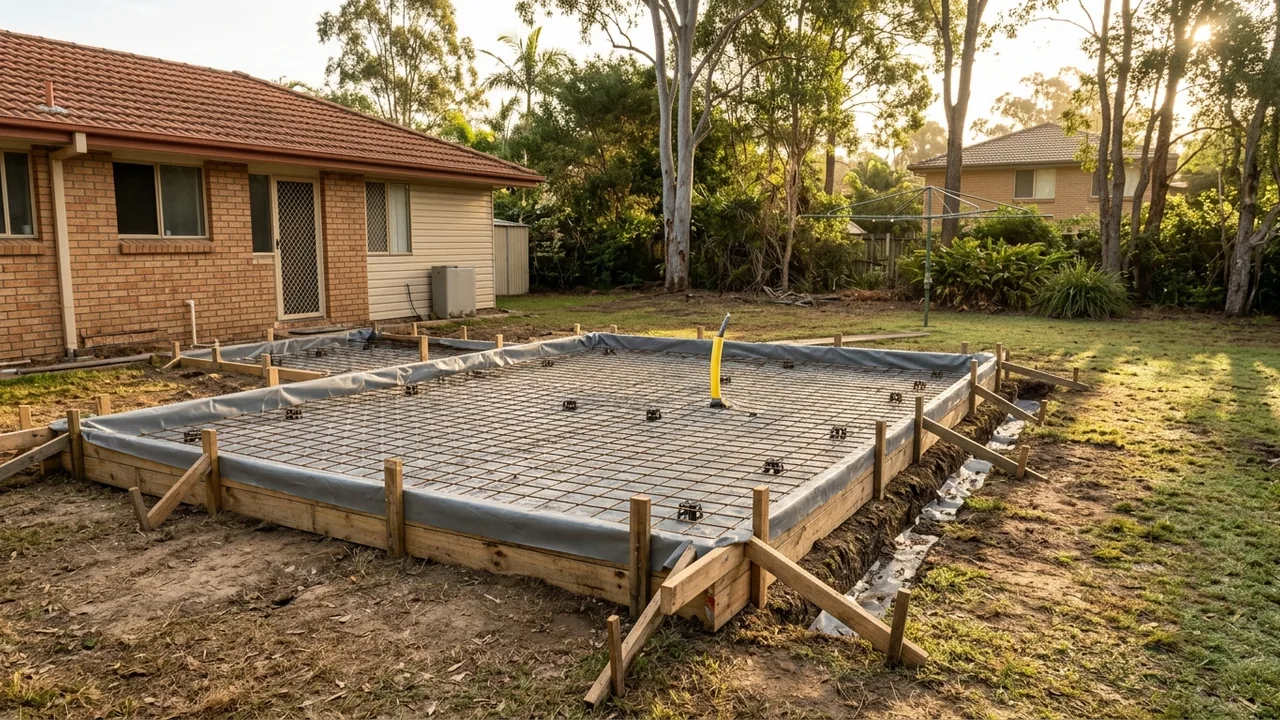
Salt-laden air accelerates the corrosion of steel reinforcement. When the steel rusts, it expands, which cracks the concrete from the inside. The fix for this is adequate concrete cover over the mesh (typically at least 40-50 mm in higher-exposure zones) and using a mix that is dense enough to resist moisture penetration.
The soils around Hemmant and Wynnum West also include areas with reactive clay, which moves with moisture changes. A slab poured without proper sub-base preparation on reactive clay will move and crack over time. This is not a reason to avoid concrete slabs, but it is a reason to understand what is under your ground before you pour.
A local concreter who works this area regularly will know these things. A DIYer doing their first pour might not.
Cost: DIY vs Professional
This is usually the reason people consider DIY, so it is worth being direct about it.
For a basic 6 m x 6 m garage slab (36 m²), rough estimates in the Brisbane bayside area might look like this:
DIY costs:
- Concrete supply (ready-mix): $900-$1,400
- Mesh and rebar: $200-$400
- Formwork timber (some reusable): $100-$250
- Tool hire (screed rails, float, tamper): $80-$150
- Your labour: one full weekend day minimum, likely more
Total: roughly $1,300-$2,200 in materials and hire, plus your time.
Professional costs:
- Same slab, professionally installed: typically $3,000-$5,500 depending on site conditions, finish type, and access
The gap is real. On a large slab, you might save $2,000 or more by doing it yourself. But factor in this: if the slab cracks badly or the surface finish is poor, a repair or resurfacing job can cost $800-$2,500. A complete demo and relay is more again. The savings look different once you account for that risk.
For exposed aggregate, coloured concrete, or decorative finishes, there is almost no case for DIY. The technique involved in seeding aggregate or applying colour consistently is genuinely skilled work, and mistakes are visible every time you walk on it.
What Professionals Bring That You Cannot Easily Replicate
Beyond technique, a licensed concretor has:
- Access to better concrete. They order regular volumes and often have better relationships with suppliers, including access to specific mixes suited to local conditions.
- The right crew. Screeding a slab properly really does need at least two or three people working in sync. Hiring friends who have never done it before is a gamble.
- Insurance. If something goes wrong with a professionally poured slab, there is a path to remedy. DIY mistakes are on you.
- Warranties. Reputable concretors typically warranty their work, usually for a period covering defects in the pour itself.
They also know how to read a site. Issues like underground services, drainage paths, and soil bearing capacity are things an experienced eye picks up that a first-timer might miss entirely.
A Closing Recommendation
If the slab is small, you are physically capable, and you are happy with a functional rather than decorative finish, a DIY attempt on a garden pad or simple path is a reasonable call. Buy a good instructional resource, hire the right tools, and do not rush the prep work.
For anything larger than about 10 m², for any slab taking vehicle loads, for decorative surfaces, or for slabs on the bayside sites around Hemmant, Wynnum, and Manly where soil and salt-air conditions add complexity, get at least one professional quote before committing to DIY. The quote alone is free, and seeing what a professional would charge often helps you decide whether the saving is worth the risk.
You are not obligated to hire anyone. But the numbers, and the variables, are worth understanding clearly before you order that ready-mix truck.
Quick answers