Concreting guide
Do you need council approval for concrete work in Brisbane's Bayside suburbs?
Most concrete driveways and slabs in Brisbane do not need a development application (DA). If your project sits within Brisbane City Council's accepted development criteria, you can get started without formal approval. But there are real exceptions, and getting it wrong can mean expensive remediation or disputes with neighbours.
What the Rules Actually Say
Brisbane City Council governs most concreting work through its Brisbane City Plan 2014. Under that plan, driveways and slabs are typically classified as accepted development, meaning they don't need a DA provided they meet the code's self-assessable criteria.
The key document is the Reconfiguring a Lot and Other Development Code (for site coverage) plus the relevant overlay maps. In plain terms, you're generally fine without approval if:
- The driveway connects to an existing kerb crossing already approved by Council
- The slab doesn't push your total impervious surface area past the site coverage limits set for your lot
- The works don't interfere with Council infrastructure, stormwater easements, or protected vegetation
If any of those conditions aren't met, you'll likely need to lodge a development application or at minimum get a kerb crossing permit through the Council's road corridor permitting process.
Worth noting: even when no DA is needed, a kerb crossing approval (sometimes called a vehicle crossing permit) is almost always required before you or a contractor breaks the kerb. This is separate from development approval and is a practical step many homeowners overlook. Council applies a fee for this, typically under $200 at time of writing, though you should confirm current fees on the Brisbane City Council website.
When You Do Need Approval
Several situations push a standard driveway or slab into territory that needs formal sign-off.
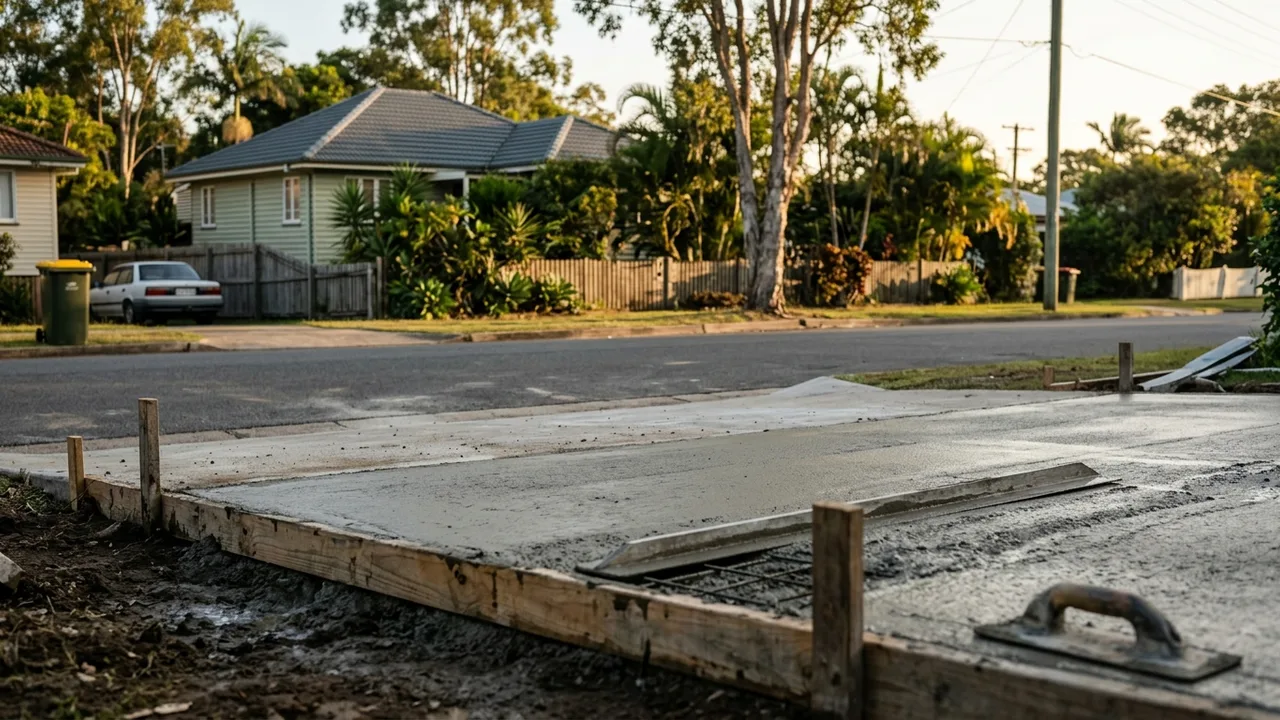
Site coverage limits. Brisbane residential lots have limits on how much of the site can be covered by impervious surfaces (roofing, concrete, paving). These limits vary by zone and lot size, but as a rough guide, low-density residential properties are often capped at around 50-60% total site coverage. If your proposed slab would tip you over, you'd need to apply for a material change of use or seek a variation.
Overlay areas. This is the one that catches people. Parts of the Bayside cluster, including sections of Wynnum, Manly, and Lota, sit within overlays that trigger additional assessment. These include:
- Flood overlay: Much of the Hemmant and Wynnum West area sits in flood-affected zones. Adding impervious concrete can affect stormwater runoff, and Council takes that seriously.
- Waterway corridors and wetland overlays: Properties near Moreton Bay or creek lines in Wynnum and Manly can fall inside these overlays.
- Neighbourhood character overlay: Less common for slabs, but relevant if your driveway would significantly change the streetscape in a character area.
Retaining walls adjacent to driveways. If your driveway involves cut-and-fill earthworks with a retaining wall over 1 metre high, that wall will almost certainly need a building permit under the Queensland Building Act, even if the slab itself doesn't need a DA.
Easements. If a drainage or services easement runs through your property, you typically cannot pour concrete over it without written consent from the relevant authority. Easement details show up on your property's title documents.
The Kerb Crossing Permit (Don't Skip This Step)
Even on a simple job where development approval isn't required, the kerb crossing permit is the step that causes the most avoidable drama. Council owns the kerb and the footpath verge. Cutting into that without permission can result in Council requiring you to reinstate the kerb at your own cost.
In Bayside suburbs, this matters more than people expect. Wynnum and Manly have older street infrastructure with existing crossings that may not align with where you want your new driveway. A new or modified crossing needs to meet Council's standard drawings for width, gradient, and drainage.
Your concreting contractor should be familiar with this process, and the better operators in the area will pull the permit or walk you through applying for it yourself. Either way, factor in a few weeks for approval before the pour can happen.
Stormwater and Salt-Air Considerations for Bayside Properties
Properties in Hemmant, Wynnum, Manly, and Lota face a double challenge that inland Brisbane properties don't: proximity to Moreton Bay means salt air accelerates surface wear on concrete, and the low-lying terrain means stormwater management gets scrutinised more carefully.
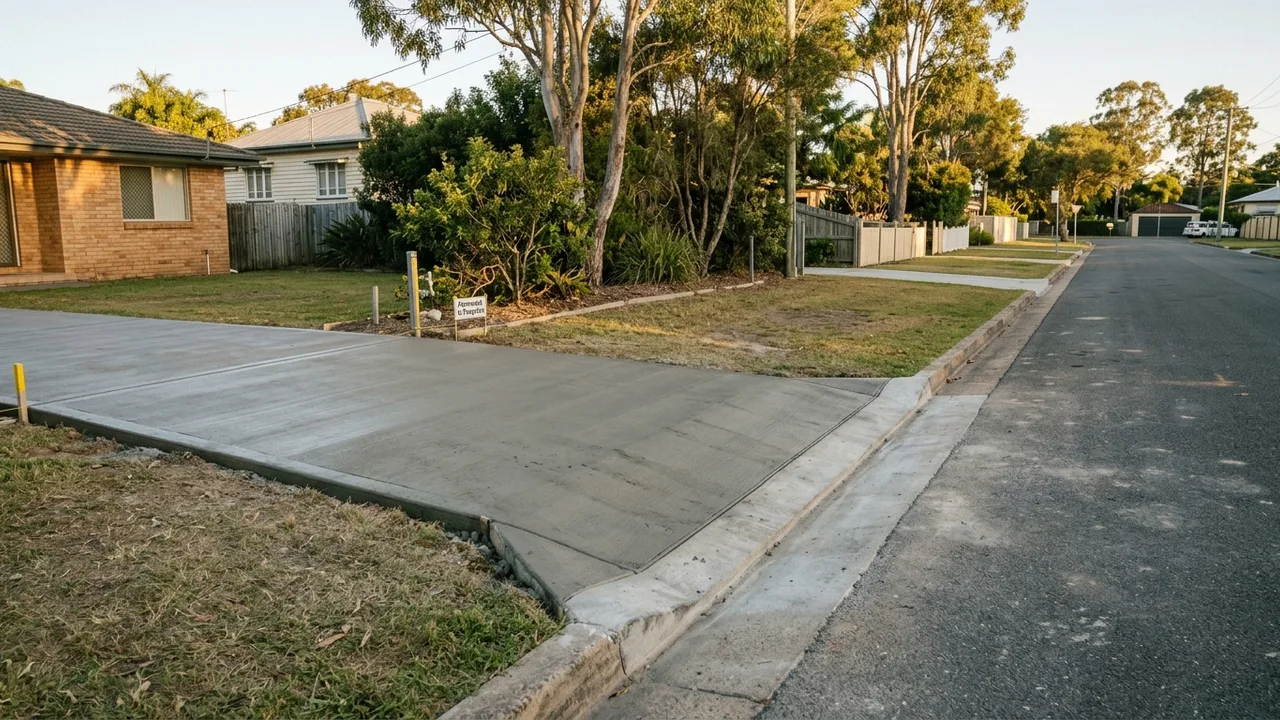
On the stormwater side, Council may require that runoff from a new driveway or slab be directed to an on-site detention system or discharged at a controlled rate, particularly in flood overlay areas. If you're adding a large entertaining slab to the back of a Wynnum or Lota home, it's worth having a contractor who understands local drainage patterns, not just generic residential concrete work.
On the salt-air side, this isn't a regulatory matter but it is a practical one. Exposed aggregate finishes tend to hold up better than brushed finishes in bayside conditions because the aggregate itself is more resistant to surface pitting than a plain cement paste surface. Sealing every 2-3 years helps regardless of finish type.
Practical Steps Before You Pour
Running through this checklist before you engage a contractor will save time and money.
- Check your overlay maps. Log into Brisbane City Council's Development.i portal and enter your property address. It'll show you which overlays apply. Free and takes about 5 minutes.
- Check your title for easements. Your solicitor or conveyancer can pull this, or you can search through the Queensland Titles Registry.
- Calculate your current site coverage. Measure the footprints of your house, garage, and any existing paving. Compare to your zone's allowable coverage. If you're already close to the limit, a large slab could tip you over.
- Apply for the kerb crossing permit early. Don't leave this until after you've booked a pour date.
- Ask your contractor directly whether they've worked in your specific suburb and whether they're familiar with local Council requirements. A contractor who works regularly in Wynnum or Hemmant will know the stormwater and overlay quirks; one who mostly works in the suburbs west of the Gateway Motorway may not.
DIY vs Engaging a Licensed Concreter
Pouring your own slab is legal in Queensland, but there are limits to where DIY makes sense. For a small garden path or a shed slab in a straightforward location, a capable DIY'er with access to a cement mixer can produce a functional result.
For driveways and larger slabs, the trade-offs shift. Driveway concrete typically needs to be at least 100mm thick (often 125mm in vehicle traffic areas), properly reinforced with mesh or rebar, and finished to a consistent level to avoid pooling. Getting the formwork, reinforcement, concrete strength (typically N25 or N32 for driveways), and finish right is harder than it looks if you haven't done it before.
Licensed concrete contractors also carry public liability insurance, which matters if a slab is later found to have damaged drainage or encroached on an easement. And if your project needs a kerb crossing permit, Council will often prefer that a licensed operator does the road corridor work.
The cost gap between DIY and professional work on a standard driveway is typically $800 to $3,000 depending on size, but the risk gap is wider than that figure suggests.
A Straightforward Recommendation
If your site is straightforward (no overlays, no easement issues, not near the kerb coverage limit), the practical steps are simple: get your kerb crossing permit, hire a licensed local concreter who knows the area, and pour. No DA required.
If your site has any of the complications above, especially flood overlay, proximity to Moreton Bay waterways, or existing coverage close to the limit, spend an hour with the Council's online tools and your property title before you commit to anything. If that still leaves questions, a phone call to Council's planning information line costs nothing.
Getting this right at the start saves a lot of aggravation compared to pouring first and asking questions later.
Concreting Hemmant connects homeowners across Hemmant, Wynnum, Manly, Lota, Wynnum West, and Manly West with local concrete contractors. If you'd like a quote on a driveway, slab, or path in the Bayside area, the process is straightforward: tell us about your job and we'll put you in touch with someone who works regularly in your suburb.
Quick answers