Concreting guide
Is there a best time of year to pour concrete in Brisbane?
The short answer: yes, sort of
There is no month in Brisbane when pouring concrete is physically impossible. But there are conditions that make a pour genuinely risky, and a few that make it unnecessarily hard on your budget or the finished result. The honest answer is that timing matters more for concrete than most people expect, and Brisbane's climate creates some specific traps worth knowing about.
Why concrete curing is so temperature-sensitive
When concrete sets, it is not just drying. A chemical reaction called hydration is happening between the cement and water. That reaction needs time and a stable temperature range to produce a strong, durable slab. The generally accepted sweet spot is somewhere between 10°C and 32°C.
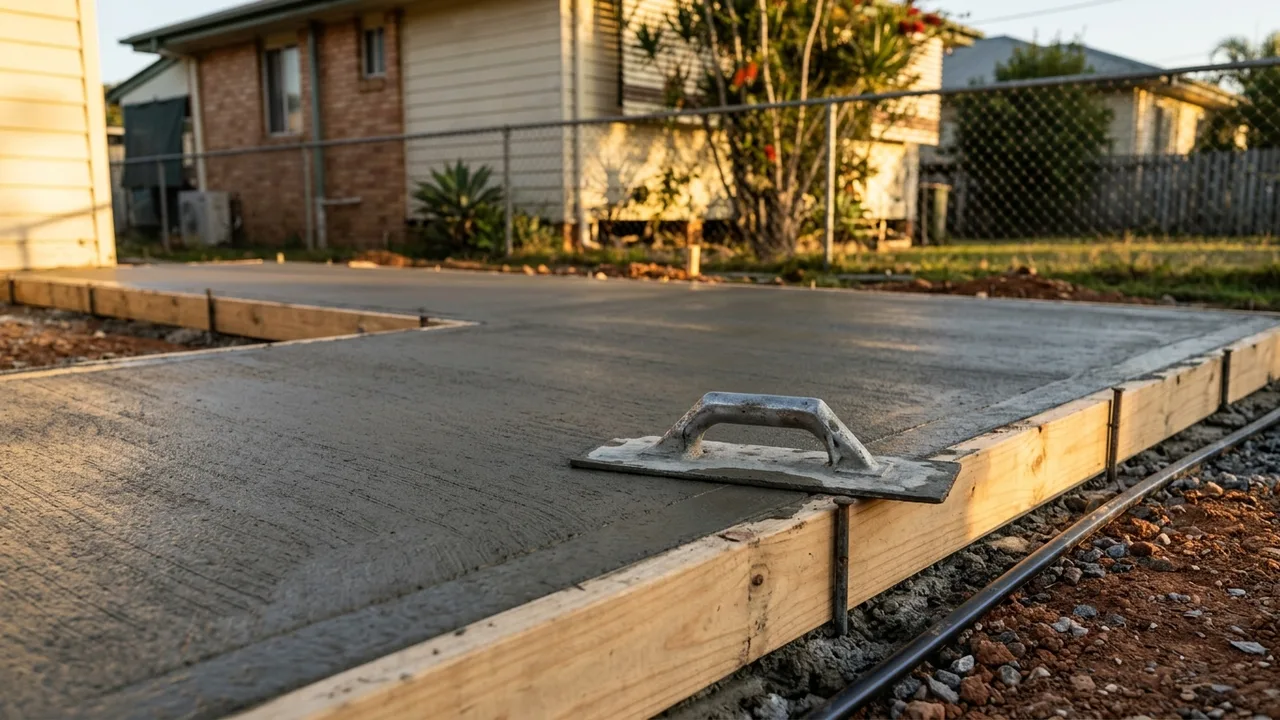
Brisbane rarely dips below 10°C, even in winter, so cold-weather problems are mostly not a concern here. The problem is the other end of the scale. On a 35°C January afternoon in Hemmant or Wynnum West, surface temperatures on exposed concrete can climb well above air temperature. That accelerates moisture evaporation before the hydration reaction has finished, which can lead to:
- Plastic shrinkage cracking (fine surface cracks that form within the first few hours)
- Reduced compressive strength in the finished slab
- A chalky, powdery surface layer that wears faster over time
The slab might look fine from a distance. The weakness can be internal, or it shows up years later as surface deterioration that looks like a finishing problem but is actually a curing problem.
Brisbane summer: the real risk period
Brisbane summers (roughly November through March) bring three compounding issues for concrete: heat, humidity and afternoon storms.
Heat and evaporation go hand in hand. On a 33°C day with a north-westerly blowing, bleed water can evaporate off the surface faster than it rises from below. If a finisher starts trowelling too early, they trap that surface layer and weaken it.
High humidity sounds like it would help keep concrete moist, but it complicates the timing of each finishing step. The window between workable and set can become unpredictable, especially when a sea breeze rolls in off Moreton Bay and the temperature drops ten degrees in twenty minutes. Experienced concreters in Wynnum and Manly know this pattern well. Less experienced ones get caught out.
Afternoon storms are the most disruptive factor. A summer storm landing on fresh concrete (particularly in the first two to four hours after a pour) can:
- Wash out the cement paste near the surface
- Create a weak, sandy surface layer
- Pockmark an exposed aggregate finish permanently
The Bureau of Meteorology's historical data for the Brisbane bayside area shows that convective storms are most frequent between December and February, typically in the mid to late afternoon. A pour that starts at 7am and finishes at noon is in a reasonable position. One that runs to 3pm in January is taking a risk.
What good operators do in summer
Reputable concreters working in the Hemmant and Wynnum cluster in summer will typically:
- Schedule pours for very early morning (starting as close to first light as practical)
- Use a retarder admixture to slow the set and extend the working window
- Keep the aggregate-to-cement ratio appropriate for conditions
- Have hessian, curing compound or polythene sheeting on site before they start
- Monitor the weather forecast the evening before and be willing to reschedule if a storm is likely before 2pm
If a contractor doesn't mention any of this when you discuss a summer pour, it's worth asking.
Brisbane winter: mostly fine, with one catch
June, July and August are genuinely the most forgiving months for concrete work in bayside Brisbane. Temperatures are mild, humidity is low, the chance of afternoon storms drops significantly, and the curing process tends to be predictable and even.
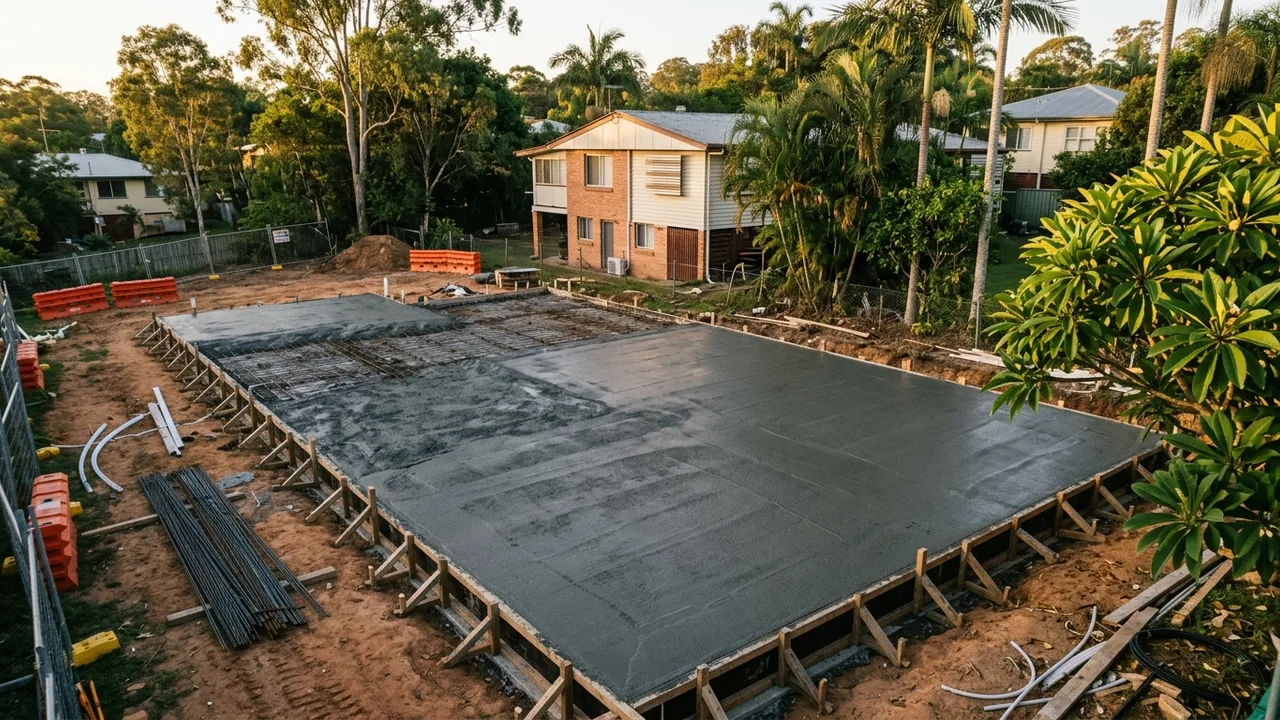
The one catch is overnight temperature. On clear winter nights, Hemmant and surrounds can drop to around 8°C to 12°C. That is not cold enough to freeze concrete (a risk in southern states), but it does slow hydration noticeably. If you pour in the afternoon and temperatures drop overnight, the early curing period happens more slowly than ideal.
This is not usually a problem for a properly prepared mix, but it is worth knowing if someone is quoting you an afternoon pour in July. A morning start means the slab has several hours of warmer daylight to begin hydrating before the temperature drops.
The practical upside of winter: your concreter is less likely to be fighting a storm or a heat spike. Many jobs in the Bayside cluster come in slightly under budget in winter simply because conditions are less demanding and fewer contingencies are needed.
Wet season and drainage: a Hemmant-specific consideration
Parts of Hemmant sit in low-lying areas with clay-heavy subsoil. The same applies to sections of Wynnum and Lota. After heavy rain, that ground takes time to drain and stabilise.
Pouring on wet or saturated subgrade is a separate issue from curing conditions. It affects:
- Compaction: you cannot properly compact wet clay, which means the base under your slab may shift as it dries
- Slab cracking: movement in the subbase translates directly to cracks in concrete, sometimes within weeks
- Adhesion: for resurfacing jobs or decorative overlays, a damp existing slab prevents proper bonding
Reputable operators will test the subbase moisture before pouring and, where needed, allow a few days for drainage or bring in road base to stabilise the ground first. This adds cost. It is worth it. A cracked slab on a wet subbase is not a warranty issue, and you will be looking at the result for twenty years.
Spring and autumn: the overlooked sweet spots
September, October, April and May are arguably the best times to plan a concrete job in Brisbane. Temperatures are moderate, storm risk is lower than summer, and ground conditions are typically stable.
October can start pushing toward summer heat, so an early October pour is safer than a late October one. April is often ideal: the wet season has passed, ground has had time to drain, and you have several months of stable weather ahead for the concrete to cure fully before being subjected to serious UV exposure or heat stress.
If you are planning a driveway, alfresco slab or garage slab for a home in Manly, Wynnum West or Hemmant and have any flexibility on timing, aiming for autumn or spring is the most straightforward way to reduce weather-related risk without paying extra for it.
Practical advice before you book
Concrete is not infinitely patient, but neither is it impossibly fussy. Millions of slabs get poured in Queensland summers and cure perfectly well because the crew knows what they are doing and plans accordingly.
A few things worth confirming with any concreter before you commit:
- Ask about their wet-weather policy. What happens if it rains the morning of the pour? Who wears the cost of rescheduling?
- Ask about curing method. Will they apply a curing compound, lay hessian, or use polythene sheeting? This matters most in summer and on decorative finishes.
- Check their early start capacity. For summer pours, a 6am or 7am start is meaningfully better than a 9am start. Not all operators can mobilise that early, especially for smaller residential jobs.
- Don't book a summer pour if your schedule requires afternoon finishing. Large slabs, like a double garage or a long driveway with decorative aggregate, need a full day. If afternoon storms are likely, that is a real risk.
The cost difference between a winter pour and a summer pour is usually small on residential jobs in the $1,500 to $15,000 range typical of Bayside Brisbane. The quality difference, if conditions are poor, can be significant and lasting.
If you want to talk through timing for a specific job, a local operator who works regularly in Hemmant, Wynnum and surrounds will give you a straight answer on what is realistic for your site and your season.
Quick answers